Feeds:
Posts
Comments

Search terms

Funny. These are the phrases that people get to my blog from search engine results, of course, sifted through to find the most amusing ones. (text in brackets is my own commentary) A bit silly, but I’m getting swamped with uni work and a bit of comical humour is always nice. And there’s a cool website that can convert any mundane text such as this into a graphic design masterpiece! http://www.wordle.net/

Picture 1

November 2008-July 2009
November: first touch with the alphabet,  australian alphabet soup,  hello alphabet soup

December: distribution taste buds tongue, “healthy” “mind” “diet”, curry soup, rolling stones early stuff, albert einstein tongue

January: art of kagaya, taste buds on my tongue is raw (oh really?)

February: 咕嚕肉 hand writing

March: slight tongue burns, pictures of healthy/unhealthy eating for (yeah, my blog does have a juxtaposition for a fair few of those), vegemite pancakes (yuck?!), moist kitty tongue, taste buds going crazy (haha), eat explode stomach, tasting dan dan noodles, anthropology family recipe, msg at palace chinese restaurant sydney, haw [sic] to make fried rice, scallop shield with fish, is roasting marshmallow on stove bad? (I hope not. XD) , art in marshmallow (that would be lovely… creating masterpieces from melting marshmallows), “carrot used to describe incentive,potato” (what’s this? like the thing they do with donkeys?), “she inflated, and her stomach exploded.”, yum cha kitchen to seating ratio

April: roasting marshmallows on gas, burning spear, anatomy chicken ear (hm.), japanese eating teriyaki faeces (?!!), true story about taste buds at the back (tell me! oh do tell me about the true story!), manatee, 10,000 things to do with cream of mushroom (wow.), how to cure burnt taste buds (I’d like to know too. ice cream apparently, deceivingly offers no alleviation), marshmallow monkey, marshmallow explosion

May: “see through ceiling” (awesome. can that be in my bedroom?), snoppy burning marshmallow (haha, I’d like to see him do that), avoid hardening of marshmallows when roasting, exploited ginger (oh the poor ginger is getting exploited!), exploded taste bud on tongue piercing (ow), sydney haymarket greasy spoon, how long do taste buds last- 10 minutes? (what? where do people get these notions from?), edible string made of marshmallows

June: fat ginger actor, silkie chicken (and not ’silky’.. apparently silkie is a type of chicken), oxford dictionary spelling of dietitian (I think they spell it with a ‘t’ and not a ‘c’ as the main one), one ordinary marshmallow (poor ordinary marshmallow…), vegetables hands (now wouldn’t that be nice? we can just eat ourselves!), don’t eat the marshmallows korea (why? I can just imagine somebody in slow-mo soccer defending footage of a marshmallow hurled towards Korea, protecting the country from this most ghastly monstrosity), monk kok obscure food, who roasted the first marshmallow (I’d like to know too), crab eating marshmallow, taste buds only taste pork (now that would be terrible), leaching australian seeds, tender buds chemistry blogs (yeah, little kids sure like to make chemistry blogs), first australian to roast a marshmallow, barbecue marscmellos, taiwan pancake made of rabbit poo, recipe cloud in cream (doesn’t that sound lovely?)

July: custard prestige (I can just imagine a pan of custard crowned with gold amongst a backdrop of luxurious prestige of awards), burnt rice, can chickens eat jackfruit, pasta chemistry (My first result: “Occurrence of protein-bound lysylpyrroaldehyde in dried pasta…”), make marshmallow mushrooms (doesn’t that sound adorable? When I was a kid these were two words I got confused…among many other embarrassing ones…), seafood stylists (can you imagine a crab with sunglasses, or octopus with gold studs on tentacles? I can.), images of rice in fibrous root,  how to get jackfruit resin off your hand (I’d like to know too), thousand layer pancake (what’s this?), fried tofu with molten liquid inside

Also, funny link from a discussion forum to my blog:
http://coquinaria.it/forum/showthread.php?t=100561
“purtroppo blog che parlano dei marshmallow arrostiti ne trovo solo in inglese. Perdono!!!” (translated from Italian) “Unfortunately blogs talking about marshmallow roast will find only in English. Pardon!”

Writing food reviews

Although there are quite a lot of people who like to eat, and quite a lot of people who like to write, not many people like both. Eating is a rather sensual and worldly affair, distinct from the interests of literary folk who are often more concerned with deeper, more profound, metaphysical issues. So outstanding food bloggers are rare, and you find that when browsing through the food blogosphere, the same ubiquitous names pop up everywhere (101 Cookbooks is an example: iGoogle has even set it as the default for the recipes tab, and nearly every food blog has placed it on their blog list, puzzling me at first since it was always listed prominently at the very top, then I realised it was because of its numerical beginning!).

I never knew it takes so long to write up restaurant reviews… I say, on average, it takes about 40 minutes to write up a review for one restaurant… it’s probably because I’m trying to remember back to such a long time ago (well, in part due to my procrastinating tendencies..), googling for their online menu, looking through photos in an attempt to treat food as an artwork (and translating that into words!), fumbling over the adjectives to use to describe something as subjective as taste, searching the thesaurus to avoid repetitive and lacklustre descriptions, researching the restaurant/food to get some inspiration for story-telling and finding diplomatic ways to express any criticisms. I guess, particularly for the first point, that’s why it’s smart for people to write down little comments/notes when they’re actually in the scene of the restaurant? But the downside to that is that while I’m there, I want to concentrate on the food and have fun with it, rather than getting bogged down with having to write down things. I guess that also explains why I enjoy writing restaurant/food reviews: because I can recount the pleasurable encounters I have had with food glorious food!, rather than finding ways to critique it, and also because it’s a creative outlet for me.

Well… now I know I’ll never want to become a professional restaurant critic! Yet I find it strange that, as someone who is a proud aficionado of art, I did not start up an art blog.

It’s not that I enjoy food more than art; it is hard to compare things that way. But with art, it invokes such emotional, subjective responses, and in such intangible ways that it is hard, nay, almost impossible, to express with words. I also have many many more encounters with food than with art, and that is also true for the rest of the population, so it gives a lot more room for connection. Food is, I admit, much easier to talk about than art, which requires lengthy investigation into the context, motives, symbolism, etc. of the artwork, rather than the simplicity of food. Lastly, there isn’t much out there about restaurants or particular food types (aside from the occasional magazine/food blog articles), but when you type in the name of an artwork into any search engine, you are inundated with a flood of reviews/critiques; so food gives me a little niche to write about, something that has not been explored as much, something that is flexible and subject to change.

Well, that’s enough of my ponderings… better get back to study! (four exams in the coming week…)

My three month lull in recipe-posting has come to an end, that is, if you can call this a ‘recipe’. It’s probably more of an introduction to an interesting food, than a recipe per se. Come to think of it, that marshmallow post wasn’t a recipe either. Whatever. 

jackfruit-seeds-1

If you love the flavour of banana, mango, papaya, lychee, longan or pineapple, you’d like jackfruit, because all these fruits have been likened to the multifaceted flavour of jackfruit. But the good thing is that it doesn’t have that gross mushiness of banana and papaya, or the tart tongue-burning effect of pineapple. The texture is a bit harder to describe, but I can tell you, if you are fond of peeling off the little peely cheese sticks, one by one, you’ll love doing that to jackfruit. So imagine strands of peely cheese, with a mouthfeel not unlike firm longan. Jackfruits come in an interesting morphology: the main eating component are lunar-shaped units, which, after gauging out of the very thick skin (a process which would require the barrier of gloves, as they produce an incredibly sticky ‘resin’), leaves many strands of fibrous thingies still attached and resembling a bed of anemone, edible, but requiring a knife to cut out and also very chewy). The main drawback lies in the aftertaste: a rather pungent odour that lingers for a day, and on rare occasions, jackfruits can have a foul, detergent-like taste.

 jackfruit-seeds-2

The seeds are also edible, surprisingly (isn’t googling random things so good as a procrastination tool?!). They are similar to chestnuts, but less moist, less starchy, less sweet and a little more savoury/acidic, with a hint of jackfruit notes. Every time you eat a jackfruit sac, one of these little seeds, with a beautiful pinewood-like pattern, are encased within. Pop it out of the membraned pouch and rinse with water; there will still be a sticky film of slime, that’s okay. Place in a container, storing it for several days (up to two weeks, and the seeds were still fine, but they become a washed-out ash wood grain rather than the deep pinewood when fresh, as the photo juxtaposes), until you have accumulated enough seeds to cook with. I boiled them in water for 10-20 minutes (more towards 20, if you like it a bit more soft, and the acidic flavour also fades with more cooking)… but apparently you can roast them or stud them on rice in the rice cooker (works well), and used in the manner of potatoes for mash or curries.


jackfruit-seeds-3-waterA most peculiar thing happens to the water it’s boiled in: it turns to a crimson liquid like it’s for X-ray developing, which must have leached out of the mahogany-hued inner skin (isn’t it amazing how the colours of the seed can exhibit features of such a variety of wood species?) (I don’t think X-ray developer is actually crimson-coloured. Being a dental assistant, I should know it’s actually brownish. But oh well, first imagery that came to my mind for crimson water was X-ray liquid. My mind is rather strange).


There are two layers of husk: the tough outer husk that you need to peel after it’s cooked (which is usually effortless with just your hands, because it usually cracks a little when dried raw (as you can see from the photo above)), and the thin skin that’s edible, albeit chewy (like the peanut skin).  


A word of warning though: like baked beans, it is recommended this food is consumed in well-ventilated areas. :P

jackfruit-seeds-4jackfruit-seeds-5 

Here is the long-awaited (not that I am implying anybody is waiting for it!) second half of the restaurant series in Hong Kong. This is 2623 words long, over the word limit for my current assignment on privatisation of health services. (seriously, how do they expect me to discuss such a complex issue indepth with such a constraint of word limit, when I can easily write so much about something as simple as eating!??)

Lamma Mandarin Seafood Restaurant (Peach Garden Seafood Restaurant 世外桃源海鮮酒家) (Lamma Island)

If you’re a nature lover in need of a respite from the metropolitan buzz of downtown Hong Kong, the outlying archipelago are the perfect sanctuaries. Only a short boat cruise away, peaceful scenery, meandering hiking trails, quaint villages, traditional farming fields, charming fishing boats, with not a car in sight and fresh seafood awaits you. Enchanting historical remnants of Hong Kong have been preserved in these isolated old-world islands.

Pretty ain't it?

Pretty ain't it?

One such island is Lamma Island 南丫島. Departing the ferry, you are greeted with a continuous strip of seafood restaurants, all overlooking the harbour with plastic dining tables and fluorescent lighting. Rows of fish tanks piled one on top of the other cover the shopfronts forming square mosaics, some even have underground pools, and I wonder if there have been anybody careless enough to step into them?! Competition is fierce among the restaurants, and the waiters always advertise (pester) passers-by.

The Rainbow Seafood Restaurant is traditionally the most eminent, with their windows adorned with a photo entourage of celebrities ranging from Joey Yung to Martin Yan, and I do remember last year, the meal I had was very delicious. However, my dad insisted that it was overpriced and so went to this restaurant instead, which has a very interesting name: (translated) Otherworldly Peach Garden Restaurant. We were lucky enough to procure a seaview table, and despite the discouragement of the waiter, we got the set meal for three (I didn’t know why they said the set meal isn’t good: later my aunty explained that of course they wanted us to order separately since they would make more profit!).

lammaislandseafood1

lammaisland2The whole meal costed around $HK300+ from what I remember. It had several dishes, some of which I have forgotten. There was garlic and chilli prawns (prawns were so flavoursome!), deep-fried garoupa (amazing: super crispy batter with a tender meat), fried rice (most people can make fried rice, but only the skilled can make it taste really good), whole crab (sauce wasn’t anything special, but crab was fresh… I don’t like poking, prodding, cracking and sucking the meat out of the shell though!), and the standard dish of vegetables (lettuce I think). In the end, we finished off by ordering an abalone dish: $HK30 each abalone, which came in its shell with a simple sauce and dried tangerine peel. I didn’t think I would like it, but it was

Abalone

Abalone

so succulent yet chewy textured, and a wonderfully light seafood sweetness, complemented perfectly with dried peel (even though I usually hate that!). So if you’re looking for a fresh, exquisite seafood dinner, look no further than Lamma Island.

Food Republic (Tsim Sha Tsui and Taikoo Shing)

(another review)

A chain of food courts that originates from Singapore, Food Republic is inspired by local hawker fare (Wikpedia, 2009): an impressive variety of ‘fast food’ stalls from a wide array of cuisines. Not surprisingly, there is HK cuisine and other regional varieties of Chinese cuisine, but also Japanese, Korean, Taiwanese, Indian…  Typically, I spend over 30 minutes walking around trying to make a decision from the abundance of choices, especially because it seems like all the outlets are of high quality and relatively cheap.

Amos and I had been walking around the Art Museum in TST and figured this place would be great for a cheap feed. This time, I had Japanese pancake and foodrepublicomusoba, around $HK25-40 (the price has completely slipped out my mind). It was very tasty, but the Japanese pancake was pre-made and not hot, and consequently not soft enough, but filled with tasty cabbage and other fillings. I love the cute bonito flakes that squirm around like a gymnast’s cloth swirling around over the lingering warmth, and one must admit it is hard to go wrong with something as deliciously simple as omusoba (ketchup and Kewpie mayonaise helps too ;) ).

Le Petit Bistro (Sham Shui Po)

Escargot

Escargot

Tucked into a street that gives an industrial atmosphere, this French restaurant is owned by my aunty’s relatives (again!). Not exactly authentic French food, but I hear that some of the ingredients are sourced from France, and the cosy atmosphere makes it a pleasure to dine in. The set menus are the best value: soup, entree, main and dessert for $HK80?, with cream of spinach (not cornstarchy, but made with real cream!)/tomato boullion (I do remember eating a mussel broth last year which was fantastic), pan-fried duck breast salad/escargot atop mashed potato for entree (not the most photogenic of foods, but it’s tasty, and not slimy at all!), a large range of hearty mains (many pastas, I ordered a creamy fettucine), and dessert of which I highly recommend the baked chocolate mousse: slightly charred, chewy layer that cracks to reveal a hot, creamy and airy sighs of chocolate mousse within; it’s a delightfully enchanting treat. Other picks include butter-sauteed button mushrooms (butter and herb go together like (wait.. thinking of a witty analogy here… yes…still thinking…), okay.. you know what I mean…

lepetit2

Din Tai Fung 鼎泰豐 (Tsim Sha Tsui)

dintaifung

As a sequel to my trip to this acclaimed restaurant chain in Sydney, my foodie aunt brought me to Din Tai Fung in Tsim Sha Tsui, the only one store in Hong Kong. The decor was not as embellished as Sydney’s, being less modern and more traditional, and it was located on the top floor of the shopping centre which they exploited with a continuous wide window offering a panorama of the multi-storeyed building from above.

A word of advice: come early to avoid the rush! We arrived at 12 or so, and it must have been a slow day, because there were actually seats remaining the hour later when we left, unlike Sydney where there was a long queue (the restaurant here was, smart of them, much larger than Sydney’s). Browsing the menu, we decided to (of course) order the signature xiao long bao, as well as some other dishes. Xiao long bao was just as good as Sydney’s standards (if not better… I don’t know, that’s what you can probably assume considering Hong Kong is supposed to be more expert when it comes to food?), but the highlights for me were the other foods.

din-tai-fung

A very distinctive entree was the ’shredded special vegetable and tofu’ (translation is probably off), which wasn’t offered in Sydney’s branch. Tiny pieces of minced firm tofu and the ’special vegetable’ (don’t even know the name in English! Must be a rather rare plant) flavoured with sesame oil and adorably moulded as a dome. The taste was very unique, resembling the dintaifung3taste of spinach, but with a slightly crisp texture rather than gooey (it’s not raw), the mouthfeel was great: cold and refreshing with a big surface area to savour the sensation. Taiwanese-style dan dan noodles came next: a neat bundle of lai mein (拉麵) surrounded with a rich, spicy peanut sauce sprinkled with ground peanuts. It was a lovely explosion of intense peanut flavour, with sweet, spicy, savoury and nutty notes playing together. I really lked the smoothness of the springy noodles and the silky, sticky sauce that coated it. One thing I recommend though, don’t ask for ‘less spicy’ unless dintaifung41you can’t tolerate any heat, because there was hardly any hotness to it. The cute coral-shaped dumplings in the picture are “Sticky rice and pork mince siu mai”, which were very interesting, but because we had so much to eat we had left it to cool for a few minutes, which made the skin a little tough. I thought it was nice anyway, a very novel dish. We also had a hot and sour soup which I didn’t take a picture of, which tasted very authentic (spicy!). Lastly, we ended with a sweet note of black sesame dumpling, which was recommended over the red bean dumpling that my aunty said wasn’t good. The black sesame dumpling was cut into three (as we were all stuffed after finishing the savoury), exposing the hot, molten black sesame paste enclosed in the bun. The paste was just right: rich, smooth yet slightly gritty with finely ground black sesame, with a very aromatic black sesame kick.

dintaifung5

Presentation was impeccable, as would be expected with an award-winning restaurant, food is of a consistently high standard (no matter which country you visit!), and price is reasonable.

Tsui Wah Restaurant 翠華餐廳 (Central, Causeway Bay, Aberdeen, Tsuen Wan, Tsim Sha Tsui)

(another review)

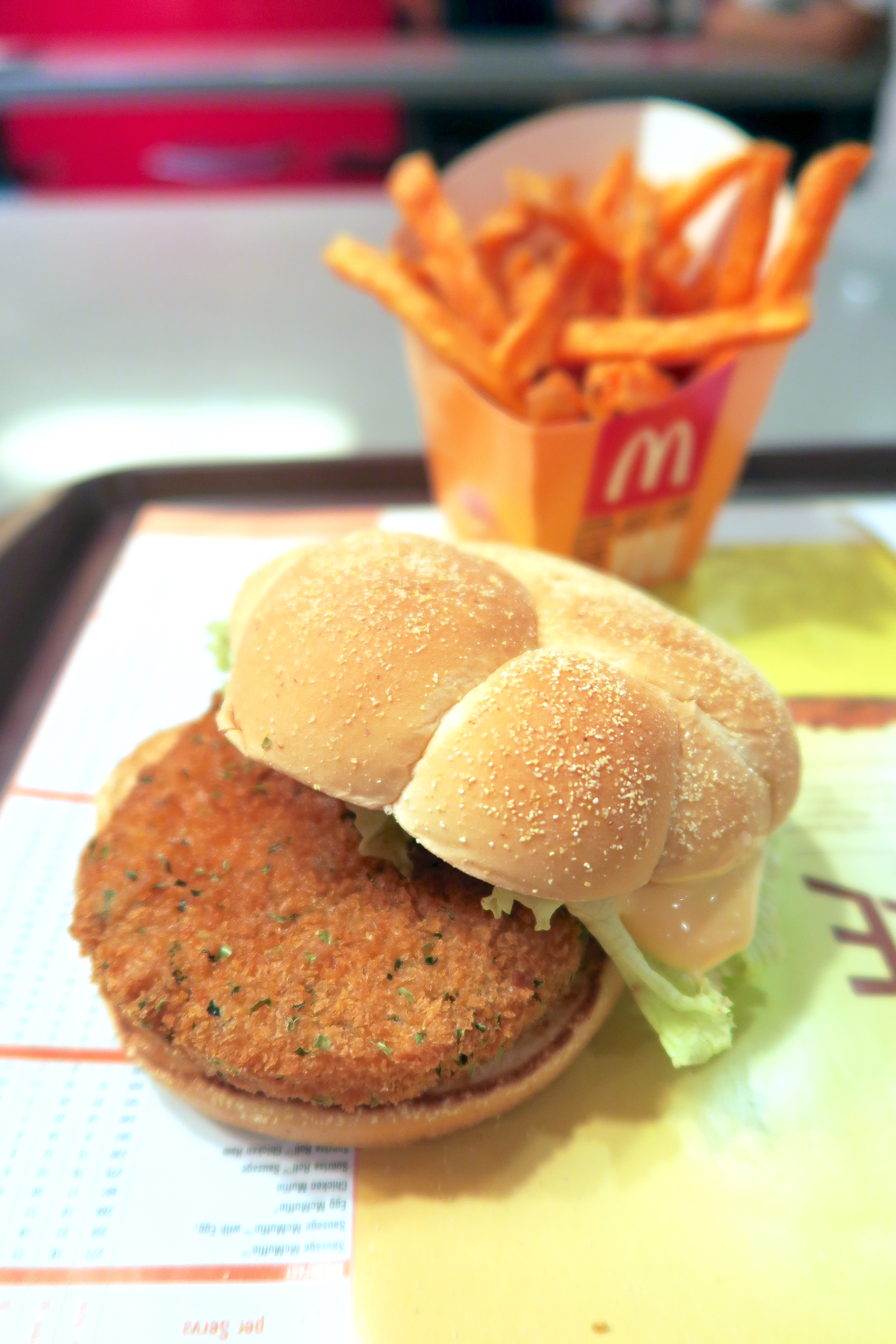
tsuiwahThis chain of restaurants is perhaps the epitome of typical no-frills chain of cha chan teng in HK. The menu is very extensive, exemplified by the countless sheets of different menus scattered haphazardly underneath the glass slide of the table, with lots of set meals of rice and noodles. My second aunty brought me here to sample their signature pork chop crispy bun and crispy bun with condensed milk ($20? and $12 respectively). Made tsuiwah2with extra large dome-shaped halves of a bun very similar to the “English muffins” you’d find in Australian supermarkets or McMuffins (slightly chewy bread dusted with a little powder) enhanced with toasting it to a lovely crunch with browned edges, and sandwiched with flavourful pan-fried pork chop, mayo and lettuce, or slathered with generous pools of butter and condensed milk. Cut in half, they make for a nice shared lunch with a friend, the ‘main’ and the ‘dessert’ made from the same base!

Super Star Seafood Restaurant 鴻星海鮮酒家 (Wan Chai, Causeway Bay)

This chain of restaurants is quite famous in Hong Kong as serving high-class fine Chinese food, winning many local culinary awards. I have been to the Causeway Bay (Times Square) and Wan Chai restaurants, both of which have the highly embellished theme characteristic of fancy Chinese restaurants. Excuse the lack of photos; the presentation of the dishes were very winsome, but I was with a large group of family and thought it might be strange if I took pictures of the 15+ dishes we ordered!

We were greeted with their iconic appetiser of crispy deep-fried whitebait fish, while the menu boasts a dazzling array of bizarre, exotic, decadent delights, including this (warning: picture may frighten!), like shark fin, abalone, fish maw, sea cucumber and stone fish. Perhaps feeling not so adventerous, my dining companions ordered more down-to-earth dishes that seemingly never-endingly came in a banquet-like fashion, like a claypot stew with vegetables and beancurd sheets (so tasty! I love beancurd sheets), deep-fried fish soaked in thick sauce (a bit too much batter for my liking), scrambled egg whites with large succulent prawns (smooth and light-tasting), yi mein (Chinese E-Fu egg noodles 伊麵) (just the right texture), and the star of the night (for me anyway): braised pomelo skin with scallops or some other sort of seafood. I say ’some other sort of seafood’ because it was the pomelo skin that shined through! It is oh-so-nice, with an amazingly melt-in-mouth tenderness, flavoured with an oyster sauce that gives some savoury to the otherwise bland taste of pomelo skin. I tried to look up a recipe on the net, and apparently it involves scraping the yellow rind off, soaking in water for a few days, occasionally squeezing it to render the spongey  toughness to a more pulpy texture, and then braising with oyster sauce.

Each main dish costs around $HK75-$170. The banquet was concluded with yet another banquet of desserts: a sweet soup of glutinous red rice and coconut milk, the usual platter of fresh cut fruits, New York cheesecake (creamy and cheesy) and steamed creamy (molten) egg custard bun. The custard bun was lovely, hot and truly had a molten liquid core of smooth creamy, eggy custard, enclosed in a soft bun (that was yellow! usually it’s white).

custard-bun

I even had the honour of having a souvenir to take home: my aunty gave me 5 packets of their crispy whitebait, with various flavours of original, curry, tomato, spicy, and seaweed (my favourite), bulked with super crunchy peanuts. I later saw that they sold it in supermarkets too! Best of all, this is not considered contraband by customs, despite being an animal product.

Kowloon Tong Club Cafe (Kowloon Tong)

View from another part of building

View from another part of building

Apparently Bruce Lee used to live in this wealthy, expat-dominated classy suburb. The buildings here are considerably shorter and classier than the tall, homogenous skyscrapers in the less wealthy areas, with only 2-4 storeys high. This modern, exclusive club reflects the prestige of the suburb, with beautiful fountains on the side of the entrance, and swanky, hotel-like decor, which (I think) only membership would permit entry to. Walking along the corridor adorned with framed paintings leads to the restaurant/cafe.

tuna-kowloon

I heard that the Hainan chicken rice here is very good, but I ordered a set menu (around $HK100?) of entree with grilled tuna salad and fettuccine with cream sauce and cured salmon. The tuna was a bit dry and the edible bones maybe increased its throat-tickling factor, but maybe tuna itself is a fairly dry fish especially when grilled. The pasta was nice, cooked al dente (unlike the soggy cream-pasta-kowloonstuff that Canto restaurants make) with lots of cream sauce (look at the pool!), capsicum, mushrooms, and the cured salmon, although very salty, gave a nice texture and contrasting piquancy cut the richness of the sauce. I also ate some wonton noodles which tasted excellent, the wontons filled with plump juicy prawn and meat, and the noodles sufficiently springy, and a cake which was light-textured.

Jade Leaf Desserts 玉葉甜品 (Soho, Central)

(other reviews)

jade-dessert1

One of the few remaining truly authentic dai pai dongs (大牌檔) in Hong Kong, this adorably unpretentious sidestreet food stall is on one of Soho’s many steep slopes, making the seating uncomfortably slanted. This place would probably be a local’s secret, as I’m sure any tourist may be a bit put off by the scruffiness, and indeed it was my cousin who brought me here. The little ’shed’ is located adjacent to the outdoor no-frills dining area with fold-up stools and tables barely shielded from the elements by an overhanging fabric canopy.

jade-dessert

The stall sells a range of quintessential Hong Kong goodies like sweet soup and noodles, all priced at a bargain of $HK7 (hot) sweet soup, $7.50 (cold) sweet soup (thought it was strange that the nicer one would be more expensive, but figured that refrigeration costs money), and less than $20 for other savoury meals (which the shop is also quite popular for).

海帶綠豆沙 (seaweed green bean soup) was very nice, the thick strips of smooth seaweed imparting a gentle flavour and slippery texture to the soup. 香草綠豆沙 (herb green bean soup) which was served cold, tasted a bit weird to me, maybe because I don’t particularly like herby tastes in sweet food, and I also think that sweet soup tastes better hot since the sweetness and flavour is jadedessertmore strongly detectable. My cousin found a piece of newspaper in the soup, but a waiter was happy to replace. I think they use newspaper somehow in the preparation process, like they did in the old days before food sanitation was a worry, but I’m not too alarmed, since everything is made the traditional, home-style method; there are much worse things that could have come into contact with food! 芝麻糊 (black sesame soup) tasted as if the black sesame had been a little burnt, but not too much so, and the texture of the gritty black sesame was just right, not watered down. The 糖不甩 (“sugar won’t come off’ literally translated) ($HK8) hot, chewy, plump glutinous rice flour balls coated with desiccated coconut, sugar and white sesame seeds, tastes so good, but then this is also something easily emulated at home. The tong sui (sweet soup) were a little on the sweet side, and they are made in a crude manner, probably resulting in many inconsistencies in the cooking, but that’s what sets it apart as authentic from the generic ‘dessert food stalls’ in shopping centres. It’s also a lot in part to do with the experience of eating at a traditional HK stall with all the old-world charm: my cousin said that by the next time I visit Hong Kong, this stall may have closed down already (because ownership can’t be transferred to other family’s hands. or something along those lines)!

Answer to previous post’s question: compressed dried wood ear 木耳.

My dining companion was my aunty, whose husband’s relatives own this restaurant. Like I said before, my mother’s family’s heritage is Chiu Chow, and I don’t know if it’s because it’s ingrained in my genes, or because anybody with a tongue would concur, but Chiu Chow cuisine is awesome. It seems like most Chiu Chow people have still remained connected to their roots: of the many of my Chinese friends, I only know the heritage of those who hail from this region (even if the ancestry was a hundred years ago!)! And indeed, why wouldn’t you be proud of such heritage, especially when it boasts subtle and delectable food that is also espoused as being one of the healthiest of Chinese cuisines ?

You’d expect that with two dining companions, there wouldn’t be much variety, yeah? We actually ordered, in much excess, six dishes and, amazingly, we managed to stuff more than half of that into our stomachs. Located a distant walk from the MTR station, in an unassuming street of Yau Ma Tei, this small restaurant has a cosy feel with warm-tinted decor. The menu is filled with an extensive array of authentic Chiu Chow dishes, and we sampled the most famous ones.

First up were the appetisers, which technically speaking, aren’t really Chiu Chow exclusively: jellyfish and chicken salad, and goose liver. Very tasty and light as they were cold, and the goose liver was, fortunately, not as pungent as I had remembered; perhaps the slight tang of the sauce countered the richness (which would usually be overemphasised in a dish like foie gras). Then came the deep-fried tofu, which I don’t think words can do justice. I don’t know what the batter they used was, but it was so crisp and crunchy, unlike any other ordinary batter I’ve tasted that goes soggy after a while. Have a look at the picture, the patterning is so cute, it’s like a coral! The dish came with a bowl of ‘broth’ (maybe it’s just salty water with spring onions) with which the tofu is dipped in, much like tempura; probably to reduce the 熱氣 (‘yit hei’: heatiness). Even after dipping the tofu in the stock, the batter retained its unique crunchy, ridgey texture, and actually made it taste nicer since the tofu itself was quite bland, and the salty spring onion broth gave it more body (the juices exude out from the crunchy skin that gave depth to the taste and mouthfeel). This was my favourite dish, and even though it’s a well-established fact that anything deep-fried will taste great, this version puts all other batters in the world to shame.

Next came the congee (潮州糜 Chiu Chow mue). I’m very familiar with this since my mum often created her own rendition by putting rice into Chinese soup, and I sometimes liked to do that too. Chiu Chow mue is different from Cantonese congee in that the rice still maintains their integrity and the soup is not as viscous: basically, just like putting cooked rice into soup, as apparently many Chiu Chow families do!  But the soup that was served was much more full-bodied and flavourful with a delightful combination of meaty baby mussels, gobbets (oh my gosh, don’t accuse me of being the bio nerd I am, but I accidentally typed in ‘goblet’, as in the goblet cells of the respiratory tract that secrete mucus…yeah, just ignore all that ;) ) of mince pork, dried salty fish, some kind of preserved vegetable and spring onion, all of which infused flavour throughout the soup while the character of each still remaining intact and not boiled to death like many Cantonese people like. I do not like congee, but this delicious dish might just make me a convert.

And yes, the most well-known and integral dish of any Chiu Chow banquet, oyster omelette (蠔烙). I had actually tried it before, in Brisbane! I also really like this dish, but I can’t really put my finger on what was missing in this one, maybe not enough herb? Nevertheless, with the texture of the omelette and generous servings of succulent oysters, I still loved it.

The last dish we had doesn’t quite share the same acclaim as the oyster omelette, but not deservingly so! 潮州糖醋麵 (Chiu Chow sugar vinegar noodle) are orange-coloured Chinese egg noodles (伊麵 yi mein) pan-fried to crisp perfection and sliced much like a pizza, then topped with dark vinegar and granules of sugar (very typical Chiu Chow idiosyncrasy: a friend of mine also of this heritage said her family also sprinkles sugar onto everything! (eg. toast, bread, yam…)). The flavours don’t sound right but it complements each other in a strangely appetising way, and the sugar granules gives an extra nice crunch to the crispy noodles. This is probably a dish that could be easily made at home (and I will!)

Some other samples from the menu which looked enticing include 韭菜餜 chive dumpling, which are chopped garlic chives enclosed in wrapping shaped like a disk and always cutely stamped with a pink dot, other varieties include radish or peanuts: steamed and sauteed for crispiness. I believe this was my mum’s family’s favourite childhood snack, and my uncle still goes back to Hong Kong to buy these from markets to bring back to Australia. Google searching this (as I do), I was surprised to find no pictures so I decided to upload this from my Sydney trip (after my uncle transported them, of course). I never knew this was such a rare delicacy!guo

A dessert dish I remember is the taro coated in sugar (very nice, and it is easy enough to be cooked yourself). And the cost? Honestly I don’t remember, but it ranged somewhere between $HK30-$70 per dish.

This may not be the most renowned Chiu Chow restaurant in Hong Kong, but if you’re just craving for a little pecking for this wonderfully delicate and hearty cuisine at reasonable prices, I would recommend it (but then again, I’ve never given a bad review. If you’re a picky eater, you’d know by now I make a terrible food critic :D ).

Can you guess what this is? Answer will be revealed in later post.

funny1

As per usual, my holiday in Hong Kong involved eating. Lots of it. I was only there for 1.5 weeks, but here are reviews of some of my dining out experiences for February 2009 (13 restaurants: and this excludes snacks! which will be in a separate post). Okay, I’ve decided to separate this restaurant section into two posts, because I’m too lazy to write so many reviews in one go.

Café Royce- SOGO Causeway Bay

This is my second visit to this elegant little restaurant located on the bottom floor of the icoic SOGO department store. It is a little expensive (a meal with drink and dessert over $HK100), but the quality is well worth the value. From memory, there’s a selection from Japanese and Western cuisines, bento boxes, unagi fried rice and pastas. I ordered a spaghetti with salmon and roe in cream

royce1

sauce, which was a unique combination of Japanese and Western ingredients, and I love how the tangy, flavourful juices that squirt out the tiny roe mixes with the rich, equally flavourful cream. And unlike other many other HK Western restaurants, the sauce wasn’t forming a pool under the spaghetti. Their signature dessert dish is the bread and butter pudding, which has a crispy top with a moist interior with raisins.

breadandbutter1

Café de Coral 大家樂, Maxim’s MX 美心MX and Fairwood 大快活

I write all three rival stores because they are all popular ‘fast food’ chain restaurants that sell cheap, generic HK meals (and also because I forgot which one I went to :P ). Fairwood used to have a clown logo and green design back when I was still living in HK, but they’ve redesigned it so it’s more aesthetically appealing, and I only just realised that they are the same stores while looking it up on Wikipedia!

The stores are dotted all along the commercially-dense areas in HK. The price range of the dishes are from $HK25-$40. The restaurants sell a variety of cuisines, Chinese being the main one and also Western and Japanese. I used to (and still am!) a little confused how the system of ordering works, but I think I’ve figured it out. You look at the menu board and choose a dish, go to the counter and order (hoping very badly you won’t say it wrong in Chinese!), where they will give you a receipt. Take the receipt to the other obscure counter inside the store (usually located adjacent to where the roast meats and meals are prepared), and then you wait with a bunch of fellow diners for the display screen to flash your number/waiters shouting the number on the receipt (note: there are many numbers on the receipt. See why I say it’s confusing for a non-HK local!!??). I think that if you order the Chinese roast meats, you have to line up separately in another queue. Then you pick up the dish on the counter that is much deserved after all that befuddlement.

cafedecoral1
The restaurants are good for the Chinese roast meats (duck, char siu, soy sauce chicken) with rice and boiled choy sum. Other dishes include ma po tofu, curry, spaghetti bolognaise (while searching for their menu, I found it amusing that the Cafe de Coral and Fairwood websites are filled with corporate and business-related topics rather than their food) etc. I was really craving Baked Pork Chop over Fried Rice, and that familiar taste did not disappoint, of crumbed deep-fried pork chop over a bed of egg fried rice with a sweet tomato sauce slightly charred in the oven.

Pokka Café

pokka1
A sophisticated chain of restaurants serving Japanese and French inspired fare. I fondly recall coming here often with my mother as a child, but I didn’t actually eat there this time round. They are located in the trendy and upmarket shopping precincts. Their windows always display enticing miniature plastic renditions of the dishes. I remember their cube toast dessert was very luscious and pretty (yes, even 8 years after, I have good long-term memory).

Café MED – Langham Place, Mong Kok

I only just noticed that HK Western cuisine restaurants really like to exploit the word “Café”. Anyway, I’m not even sure if this is the correct name of the restaurant, but it is located in the upper floors of the massive Langham Place. cafemed1The food was really good with a modern atmosphere. I had squid ink spaghetti with grilled chicken breast fillet and tomato sauce (look how black it is!! Usually it’s grey-ish.. I wonder if it’s because of food colouring or generosity in putting in more ink?). The chicken was so nice and very smooth (smoothest chicken breast I’ve tasted), the tomato sauce complemented the chicken well, the spaghetti was coated in lots of oil and cafemedfish1garlic. I don’t think ink spaghetti tastes much different to normal spaghetti, it just looks adorable, and a bit rich and creamy. My friend had a baked fish fillet in spinach cream sauce over rice, it looks really tasty and probably something that could be re-created at home.

四點金潮州料理 Four Golds Chiu Chow Cuisine Restaurant – Yau Ma Tei (Review)

My aunty’s husband’s relative owns this restaurant so we went here for lunch. I must say I absolutely loved everything, and it’s much cheaper than those Chiu Chow gold-class restaurants in HK. Call it bias, but because Chiu Chow is my heritage (on my mother’s side) and because we had so many delicious dishes, I want to reserve an individual post for this. :)

Australia Dairy Co. 澳洲牛奶公司 – Jordan

australiadairyco
This is a very famous tourist spot of HK. Funny to say but I’ve never actually been there even having lived in HK for 11 years. What is even more funny to say is that I leave Australia to go to HK to eat at an “Australian” dairy place (whether it really is Australian dairy is another issue). After stuffing ourselves silly in the Chiu Chow restaurant, my aunty decided I need to stuff even more food into me during my short stay. My aunty and I waited outside in a long queue (which is, apparently, always present), but the amazingly efficient service of the pacing waiters meant we only had to be patient for a few minutes. We went to a small table which we shared with two other patrons. The place is positively bustling with hordes of customers and waiters whom probably get more of a workout in their shift than going to a gym. I hear that their scrambled eggs are amazing, but we had steamed egg custard instead. There are two varieties: the plain egg white pudding or the whole egg almond juice pudding. Even though I thought the whole egg one (with egg yolks included) would taste richer and therefore, nicer, I actually preferred the egg white pudding; the light texture is delicious and lets the subtle flavours of egg white and milk shine through, but the whole egg pudding is quite interesting too, with notes of almond essence and is very creamy.  According to my aunty, the pudding has been watered (or milked) down a bit from the last time she came, but I couldn’t tell, and even though it is quite a ‘watery’ pudding, it’s good because it melts in your mouth and is super velvety. Australia Dairy Co. is cramped, their service is abrupt, but their food is wonderful. Oh, and according to my Aunty, a HK celebrity was eating there right next to us, I don’t know his name, but he’s a middle-aged TV actor, a little on the plump side… Pretty famous, for a celebrity to frequent.

australiadairy

This is the one food activity that evokes heartfelt nostalgia within me. What Hong Kong child would not have most looked forward to the grand finale of a barbecue; vigiliantly guarding the precious bag of marshmallows to use on the lingering flames when the honey smearing, meat spearing, and carnivorous rituals are over? While we are at it, I might as well describe the way Hong Kong people barbecue. Unlike the famous backyard ‘barbies’ of Australians, this activity usually occurs in countryside parks with concrete or brick stoves already at your disposal. Instead of a portable grill with metal racks to lay the meat on, the stoves in HK become the enclosure of a mini campfire, and instead of one or several cooks assigned the cooking flipping with tongs to serve to the idle guests, each person gets to be their own chef with a two-pronged fork used as the tool to hover individual pieces of meat over the open flames. Honey is liberally slathered over the pieces of meat when they are nearly done. Surrounded by nature, returning to the most primitive form of cookery; it is truly bliss.

img_2997

I have a comical narrative to tell. On one of these BBQ trips in Aberdeen Country Park (next to the reservoir), the family was happily engaging in the usual Hong Kong barbecueing, blisfully unaware that our most anticipated part of the feast was about to be stolen away, literally. The vigilant marshmallow-guarding must have been put on a temporary hold, because the next thing we knew, a monkey furtively grabs the bag of marshmallows, briskly fleets away, and climbs up a tree, all the while biting onto the plastic packaging with its mouth. I think that must be the most memorable and amusing story anybody could have with the usually predictable barbecue!

I digress. There are two ways of eating roasted marshmallows: by themselves, or in s’mores. If you’re looking at the title and sniggering at the thought of being taught how to stick a marshmallow onto fire, there is actually a technique. The type of roasted marshmallows I adore is the one with a skin charred to crunchy perfection, with the golden brown casing craftfully peeled layer by layer, thus maximising the crusty satisfaction able to be derived from your marshmallows. Apparently that is also the technique my mother did as a child. If you are one of those who prefer their marshmallows a-la-sucking-out-gooey-liquid style, I suggest you stick to your own devices (suspending the marshmallow a long long distance over the fire results in a minimally browned skin with totally liquefied centres, but you would need a lot of patience!).

The type of marshmallow does not matter too much, although the larger it is, the easier it is to char the skin without softening the entire marshmallow. Mini marshmallows would also serve this purpose well, although it would defeat the enjoyability of the process.

  1. First, maintain a low, steady fire or mildly red-hot embers of coal. This will ensure the greatest chance of not burning the marshmallows yet enough heat to effectively singe the marshmallow exterior without rendering an overly soft core. If you don’t want to bother with a barbecue, you can roast marshmallows to the same effect on a gas stovetop: on the lowest setting, but place the marshmallow farther from the flame.
  2. Spear one or two marshmallows onto the barbecue fork, piercing through the entire marshmallow (this is important, or else the marshmallow will just fall out).
  3. Hold marshmallow over fire or coals, poised 0.5cm above the heat source, basically as close as possible without any risk of ashes tainting the soft little gem/catching fire.
  4. Rotate marshmallow when the underside has been tinted golden brown. Continuously do this until the whole marshmallow is speckled with this crunchy crust (much like hardening molten lava!), charring as fast as possible whilst minimising the melting on the interior.
  5. Remove the utensil from the fire. Very carefully, gently pinch the tip of the marshmallow with your fingers (beware, it is hot! If you dont have tough skin, be sure to cool the marshmallow first), and slowly pull this casing away from the still-solid core. Immediately devour.
  6. Repeat steps 6 and 7, until a tiny little spheroid not capable of any more shedding remains. Of course, char this little morsel until golden brown as well! You could probably do two to four lots of skin peeling if skilled.

Another delicious way to enjoy molten marshmallows is the smore. While this has remained much of a hidden secret from Australians, it is hugely popular in the U.S. I was introduced to s’mores when I was at a Brownies camp, Year 5 in Hong Kong, where we encircled the campfire while eating gooey marshmallow sandwiched between melting chocolate digestive biscuits. Hmm… all my favourite flavours conglomerated into one dessert!

Roast marshmallows, not using the peel-layer-after-layer method, but the one that yields totally liquefied centres without burnt skin. Place a slab of milk chocolate on a digestive biscuit (peanut butter also adds variety). Alternatively, use chocolate digestives. Pull the marshmallow out of the stick and place onto the digestive biscuit, then squish the other biscuit on top, thereby spreading the goo’s surface area. The residual heat would melt some of the chocolate. Enjoy this crunchy, gooey, chocolatey treat hot.

So this week has been my first week in studying my degree. The subjects that I am studying now include Chemistry, Anatomy and Physiology, Contemporary Public Health and Australian Health Care Systems. It’s been interesting, to say the least, and I still enjoy learning about the Biology subject the most. That said, the Chemistry is a bit of a challenge to get my logical side out, while the Public Health subjects provide a bit of relief from Science and provides a more worldly, right-brained view. I’ll try hard to learn as much as I can, avoid excessive procrastination, and… well those are my two main problems, laziness and procrastination… So yeah, will work hard!!

Comic little things that happen to a nutrition student in her orientation week.

I’m sure stuff like this happens to a dietitian on a daily basis, I’m just new to this. The amusement will fade after a while :) .

Free pizza slices: nutrition student goes and grabs 3 slices, plus fairy floss and pop corn. Some random Christian uni representative comes.”Hi! What’s your name? What are you studying?” “Oh hi, I’m Bonnie, I study nutrition.” She stares down at the slice of pizza.

Accompanying her friend doing Optometry to an information session, the spectacled nutrition student helps herself to some free KFC chicken. She chuckles to her friends “Hey, I bet the nutrition information seminar tomorrow won’t be giving out free KFC.” (her friends are not amused.)

Meeting new people, the nutrition student finds out the name of her fellow student: Candy the dietitian (to-be).

Chocolate was given out as prizes in the nutrition seminar, “It’s not carrot, but it’s high in antioxidants and also increases endorphins!”

In her first Chemistry lecture, the lecturer attempts to highlight the relevance of the subject in our fields. “So the course coordinator has decided that this unit is needed for people doing Nutrition and Dietetics… we call them ‘nuts and dieters’…” And then people start laughing in amusement.

While spending some time with her high school friends in the CBD, they all go and have cake for ‘lunch’, buy 5 different Korean snacks to nibble on while loitering in Borders bookshop, and drink a sugary energy drink that was a freebie. All the while, nutrition student exclaims, “Gee, we are such bad examples of dietitian and oral hygienist-to-bes!” Staring at the Pharmacy student, “Well, drugs can cure everything!” (cough).

Corny, I know. :P

Another meme (from this food blog)!

This is like the Omnivore’s Hundred from last time, only now it focusses on Chinese cuisine. How timely this is: I’ll be going back to Hong Kong in February! I’ve actually tried most of the foods listed here, I don’t know why I’m surprised at that considering I am Chinese after all! (maybe because I’m an omnivore as well and the score for that was pretty pitiful. haha) As per tradition, the asterisks indicate my fondness toward the food… from the lavish dottings, you can tell I like my Chinese food very much. :)

100 Chinese Foods to Try Before You Die

1. Almond milk 杏仁茶*
2. Ants Climbing a Tree (poetic, not literal, name) 螞蟻上樹** (I like it so much that there was a phase where on my cooking rotation, this would be the default)
3. Asian pear 鴨梨
4. Baby bok choy 白菜苗*
5. Baijiu 白酒
6. Beef brisket 牛腩*
7. Beggar’s Chicken 乞丐雞 (I REALLY want to try!!)
8. Bingtang hulu 冰糖葫蘆
9. Bitter melon 苦瓜*
10. Bubble tea 波霸奶茶*
11. Buddha’s Delight 羅漢齋**
12. Cantonese roast duck 燒鴨*
13. Century egg, or thousand-year egg 皮蛋*
14. Cha siu (Cantonese roast pork)叉燒**
15. Char kway teow 炒粿條/炒貴刁*
16. Chicken feet 雞腳
17. Chinese sausage 臘腸*
18. Chow mein 炒麵**
19. Chrysanthemum tea 菊花茶
20. Claypot rice 煲仔飯*
21. Congee 粥
22. Conpoy (dried scallops) 干貝/江瑤柱*
23. Crab rangoon 炸蟹角
24. Dan Dan noodles 擔擔麵**
25. Dragonfruit 火龍果**
26. Dragon’s Beard candy 龍鬚糖** (my favourite candy of all time! so much so, that, upon realising there was none in Australia, I looked up a recipe. Needless to say, I haven’t ventured into that yet!)
27. Dried cuttlefish 墨魚乾*
28. Drunken chicken 醉雞**
29. Dry-fried green beans 乾扁四季豆**
30. Egg drop soup 蛋花湯*
31. Egg rolls 蛋卷**
32. Egg tart, Cantonese (蛋撻) or Macanese (葡國蛋撻)** (I am one of the rare ones who prefer the biscuity tarts, not the flaky pastry…)
33. Fresh bamboo shoots 鮮露筍/竹筍
34. Fortune cookies*
35. Fried milk 炸牛奶* (it tasted so artificial, but it’s interestingly tasty.)
36. Fried rice 炒飯**
37. Gai lan (Chinese broccoli) 芥蘭**
38. General Tso’s Chicken 左公雞
39. Gobi Manchurian
40. Goji berries (Chinese wolfberries) 杞子 (hahaha, when I was younger, and I had not got a clue what these bizarre red wrinklies were, my brother would trick me and say it was ‘rabbit poo’… needless to say, I was pretty terrified of these berries afterwards, making me miss out on this apparent ’superfood’!)
41. Grass jelly 涼粉** (mixed with a little sugar and evaporated milk.. !)
42. Hainan chicken rice 海南雞飯**
43. Hand-pulled noodles 拉麵**
44. Har gau (steamed shrimp dumplings in translucent wrappers) 蝦餃*
45. Haw flakes 山楂餅** (ah, this was my childhood nibble food…)
46. Hibiscus tea 芙蓉茶
47. Hong Kong-style Milk Tea 港式奶茶*
48. Hot and sour soup 酸辣湯
49. Hot Coca-Cola with Ginger 薑汁可樂
50. Hot Pot 火鍋/打邊爐** (the ultimate Chinese get-together on cold days)
51. Iron Goddess tea (Tieguanyin) 鐵觀音
52. Jellyfish 海蜇*
53. Kosher Chinese food 猶太中國菜
54. Kung Pao Chicken 宮保雞丁*
55. Lamb skewers (yangrou chua’r) 羊肉串
56. Lion’s Head meatballs 獅子頭
57. Lomo Saltado (is that even Chinese..)
58. Longan fruit 龍眼** (they just had to add the ‘fruit’ at the end to eludicate it’s not real dragon’s eyes! lol)
59. Lychee 荔枝** (I can’t really taste too much of a difference between this and longan.. maybe lychee is sweeter?)
60. Macaroni in soup with Spam 午餐肉通粉 (a most strange breakfast indeed)
61. Malatang 麻辣湯
62. Mantou, especially if fried and dipped in sweetened condensed milk 镘頭** (yumm!! Who would have thought a simple bread dipped in condensed milk could be so good?)
63. Mapo Tofu 麻婆豆腐**
64. Mock meat 齋肉**
65. Mooncake (bonus points for the snow-skin variety) 月餅** (snow skin mooncakes are even nicer)
66. Nor mai gai (chicken and sticky rice in lotus leaf) 糯米雞** (one of my favourite yum cha dishes)
67. Pan-fried jiaozi 煎餃子**
68. Peking duck 北京填鴨** (hm.. what’s the difference between this and the Cantonese one? I like it with the pancakes and hoisin sauce.)
69. Pineapple bun 菠蘿包** (one of my favourite breakfasts!)
70. Prawn crackers 蝦片*
71. Pu’er tea 普洱茶
72. Rambutan 紅毛丹
73. Red bean in dessert form 紅豆甜品 (I’ve never been too fond of it though)
74. Red bayberry 楊梅
75. Red cooked pork 紅燒肉
76. Roast pigeon 燒乳鴿
77. Rose tea 玫瑰茶
78. Roujiamo 肉夾饃
79. Scallion pancake 蔥油餅
80. Shaved ice dessert 刨冰*
81. Sesame chicken 芝麻雞* (a lot of American ‘Chinese’ food here!)
82. Sichuan pepper in any dish 花椒*
83. Sichuan preserved vegetable (zhacai) 榨菜*
84. Silken tofu 滑豆腐*
85. Soy milk, freshly made 豆漿*
86. Steamed egg custard 墩蛋**
87. Stinky tofu 臭豆腐
88. Sugar cane juice 庶汁*
89. Sweet and sour pork, chicken, or shrimp 咕嚕肉、雞、蝦*
90. Taro 芋頭*
91. Tea eggs 茶葉蛋*
92. Tea-smoked duck
93. Turnip cake (law bok gau) 蘿蔔糕*
94. Twice-cooked pork 回鍋肉 (well, I’ve had the canned variety XD)
95. Water chestnut cake (mati gau) 馬蹄糕* (in the lead-up to Chinese New Year, my family made a huge batch of these)
96. Wonton noodle soup 雲吞麵*
97. Wood ear 木耳*
98. Xiaolongbao (soup dumplings) 小籠包*
99. Yuanyang (half coffee, half tea, Hong Kong style) 鴛鴦
100. Yunnan goat cheese 雲南乳餅

84/100

Ginger Fried Rice

Today as I glanced at my blog stats, I was surprised to see a sudden spike for today’s views. What, had I sprung to fame overnight?! Haha, no, this blog actually featured in the “Top 5 Random Blogs” in the Foodie Blogroll (which I thought would take years for my rotation to come; I’m so honoured to be a ‘random blog’ :D )!

Anyway, this gave me some incentive to maybe post some more recipes into this.

Most people adore the universal fried rice, but I don’t think many know about this variation. It’s wonderful, especially if you are a ginger fan. The fragrance of ginger has subtle notes lingering, with that warm gingery burn dancing on the tongue, and the sweetness of the rice wine does a great job in mellowing out the ginger’s sharpness. (I looked up other recipes on the internet: lots of prettier pictures, but none had the ’secret’ rice wine ingredient!) Again, this is not a very attractive dish, but it really does taste good, and a perfect way to get rid of the mounting bowls of leftover rice in the fridge without the excessive chopping required by usual fried rice. If you like very hot food, increase the ginger to as much as you can tolerate, and like all fried rice, add any other ingredient that appeals.

ginger

(I took photos this time!)

Ginger Fried Rice

1 big bowl of cold cooked leftover rice (if you like soft rice:microwaved until cool-warm, if you like more crumbly rice: refrigerated, loosened)
1-5 tablespoons grated ginger
2 tablespoons (rounds) Chinese rice wine, 1 tablespoon soy sauce
(optional) 1 egg (beaten with salt and pepper), 1 shallot (minced)

Method
1.Heat a little oil in wok over medium heat.
2.Fry the ginger for 30 seconds then add the Chinese rice wine. Cook for 15 seconds.

frying-ginger

I added some of the juices from leftover steamed chicken to give it even more flavour

I added some of the juices from leftover steamed chicken to give it even more flavour

3.Switch fire to high heat and add rice, stir-fry evenly.
4.(optional) Remove rice from wok. Add egg and minced shallots and scramble till nearly done. Add rice back in.
5.Pour soy sauce around the rice and stir-fry evenly. Serve with vegetables and meat, like normal rice.

Source: Aunty Kitty (John’s sister)
Rating: ****

Look at how well it brushes up after image correction!

Ginger Fried Rice

Older Posts »